Showing posts with label 5. Mortgage Rate : Home Loans. Show all posts
Showing posts with label 5. Mortgage Rate : Home Loans. Show all posts
Saturday, September 20, 2008
About this Blog
Would like to seek your views regarding mortgage loans. Generally is it usually a good idea to stretch a home loan as long as possible?
Recently i was also offered a 3-month sibor package where the monthly installments are fixed, but the principal paid varies with the interest rate.
I think it sounds like a good package as there is some certainty in the amt of monthly installments paid, but any potential pitfalls from this? And the equity accumulation is quite slow due to the length of loan.
Reply by Mortgage Consultant, Mr Paul Ho:
To answer your first question. It is important to understand whether you treat the property as a single home or investment property. Different people may react differently as it is an emotional decision. For some it is an affordability issue, therefore stretching the home loan will allow you to stretch your budget to buy the home of your dreams.
Financially speaking if you are staying in the home, stretching the home loan incurs higher total cost. But some investors have been known to stretch the home loan for as long as possible to maximize their return on invested capital (If this is your concern, I can elaborate more). Longer term loans tend to be costly because all loans are structured in such a way that mostly interests are paid during the earlier years. So you will see that your outstanding loan amount seems to be standing still. Instead of 30 years, some people may take a loan of 20 years and at the end of every 2 years, they take another 20 years loan, to speed up repayment of the principle and reduce overall interest cost.
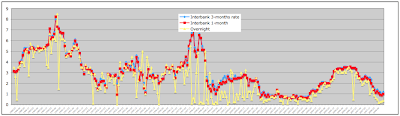
3-Months Sibor with Fixed repayment structured so that the interests are variable and re-priced every 3 months, but you have some peace of mind such that you don't have to worry about how much to pay. Over a 20 year period, interbank rates (Sibor) Singapore dollar Sibor has ever reached about 9% in around 1990. If you are paying Sibor + 0.9%, that would mean you are paying almost 10% interests. Fed overnight rates has gone as high as 20% during the recent financial crisis in which banks stop lending to each other or tightened drastically. So markets such as the Libor (London), Sibor (Singapore) are technically not immune to fluctuations in the market. And as a rule of thumb, a 3-months Sibor fluctuates more than a 6-months Sibor
There are of course potential pitfalls such as lock-in periods. If no lock-in period is concerned, then you are largely open to interest rates shocks (if any). Though Singapore market is generally flushed with liquidity and hence there tends to be a correlation between low GDP and low interest rates, but that cannot be taken for granted.
There is likelihood that interest rates may stay low (same as 2002 to 2005), but this time, there is some marked differences, the M1 money supply is much higher. There is also some risks that US bail-out of private enterprises and banks to the tune of almost 1 trillion (1000 Billion USD), plus US deficit of over 500 Billion, the USA cannot afford to find that money. If they expand money supply (aka print more money) there may be elevated inflation risks and therefore interest rate hikes possibilities. Right now, it's anybody's guess.
May also want to read:
History of Singapore Property 1960 to 2008
Property Investment is best long term investment?
Property Price Index Graph Plotter & Online Property Valuation
Your Property Investment Determines Your Financial Success in Your Life
HDB Resales: West Sees Highest Price Increase
Mortgage Advice: Is it good to stretch home loan for a longer period to increase leveraging?
Question from a blog visitor:Would like to seek your views regarding mortgage loans. Generally is it usually a good idea to stretch a home loan as long as possible?
Recently i was also offered a 3-month sibor package where the monthly installments are fixed, but the principal paid varies with the interest rate.
I think it sounds like a good package as there is some certainty in the amt of monthly installments paid, but any potential pitfalls from this? And the equity accumulation is quite slow due to the length of loan.
Reply by Mortgage Consultant, Mr Paul Ho:
To answer your first question. It is important to understand whether you treat the property as a single home or investment property. Different people may react differently as it is an emotional decision. For some it is an affordability issue, therefore stretching the home loan will allow you to stretch your budget to buy the home of your dreams.
Financially speaking if you are staying in the home, stretching the home loan incurs higher total cost. But some investors have been known to stretch the home loan for as long as possible to maximize their return on invested capital (If this is your concern, I can elaborate more). Longer term loans tend to be costly because all loans are structured in such a way that mostly interests are paid during the earlier years. So you will see that your outstanding loan amount seems to be standing still. Instead of 30 years, some people may take a loan of 20 years and at the end of every 2 years, they take another 20 years loan, to speed up repayment of the principle and reduce overall interest cost.

3-Months Sibor with Fixed repayment structured so that the interests are variable and re-priced every 3 months, but you have some peace of mind such that you don't have to worry about how much to pay. Over a 20 year period, interbank rates (Sibor) Singapore dollar Sibor has ever reached about 9% in around 1990. If you are paying Sibor + 0.9%, that would mean you are paying almost 10% interests. Fed overnight rates has gone as high as 20% during the recent financial crisis in which banks stop lending to each other or tightened drastically. So markets such as the Libor (London), Sibor (Singapore) are technically not immune to fluctuations in the market. And as a rule of thumb, a 3-months Sibor fluctuates more than a 6-months Sibor
Pitfalls of Home Loans with No Lock-in Period: Interest Rates Shocks
There are of course potential pitfalls such as lock-in periods. If no lock-in period is concerned, then you are largely open to interest rates shocks (if any). Though Singapore market is generally flushed with liquidity and hence there tends to be a correlation between low GDP and low interest rates, but that cannot be taken for granted.
Where is Interest Rates headed?
There is likelihood that interest rates may stay low (same as 2002 to 2005), but this time, there is some marked differences, the M1 money supply is much higher. There is also some risks that US bail-out of private enterprises and banks to the tune of almost 1 trillion (1000 Billion USD), plus US deficit of over 500 Billion, the USA cannot afford to find that money. If they expand money supply (aka print more money) there may be elevated inflation risks and therefore interest rate hikes possibilities. Right now, it's anybody's guess.
May also want to read:
History of Singapore Property 1960 to 2008
Property Investment is best long term investment?
Property Price Index Graph Plotter & Online Property Valuation
Your Property Investment Determines Your Financial Success in Your Life
HDB Resales: West Sees Highest Price Increase

Thursday, June 26, 2008
About this Blog
Best Home Loans: HDB:
"HDB's rates are cheapest - HDB's 2.6 per cent concessionary rate loans are cheaper than any bank rates. They also have these 4 advantages:
a. HDB is considered to be more helpful should you hit on hard times and default on your home loan.
a. HDB is considered to be more helpful should you hit on hard times and default on your home loan.
b. HDB adjusts interest rates slowly. This is helpful when rates are rising, as they are now.
c. HDB loans give flexibility. It is easy to take an HDB loan then switch to a bank loan. But you cannot take a bank loan and later refinance it with an HDB concessionary rate loan.
d. CPF rules require that bank borrowers pay 5 per cent of an HDB flat's purchase price in cash (from Jan 1, 2006). HDB loans do not have this cash requirement."
May also want to read:
History of Singapore Property 1960 to 2008
Buy or Not Buy: How to decide amid mixed market signals
When to Buy, When Not to by
HDB Housing Loans Best Compare to Banks Mortgage: Cheap & Compassionate
If you're looking for a home loan for your HDB flat, you'll be interested to read this post:Best Home Loans: HDB:
"HDB's rates are cheapest - HDB's 2.6 per cent concessionary rate loans are cheaper than any bank rates. They also have these 4 advantages:
a. HDB is considered to be more helpful should you hit on hard times and default on your home loan.
a. HDB is considered to be more helpful should you hit on hard times and default on your home loan.
b. HDB adjusts interest rates slowly. This is helpful when rates are rising, as they are now.
c. HDB loans give flexibility. It is easy to take an HDB loan then switch to a bank loan. But you cannot take a bank loan and later refinance it with an HDB concessionary rate loan.
d. CPF rules require that bank borrowers pay 5 per cent of an HDB flat's purchase price in cash (from Jan 1, 2006). HDB loans do not have this cash requirement."
May also want to read:
History of Singapore Property 1960 to 2008
Buy or Not Buy: How to decide amid mixed market signals
When to Buy, When Not to by
Thursday, June 19, 2008
About this Blog
Analysts believe yesterday’s big move was due to intervention by MAS
SHORT-TERM interest rates plunged yesterday to almost hit a year low, causing some analysts to scratch their heads after saying last week the bottom had been reached.
The three-month Singapore interbank offer rate (Sibor) fell 12.5 basis points to 1.25 per cent yesterday - a shade above the year low of 1.24 on April 22.
Analysts say they believe yesterday’s big move was due to intervention by the Monetary Authority of Singapore (MAS), which tried to cap the rise of the Singapore dollar.
‘The fall in the three-month Sibor may have been partly induced by MAS foreign exchange intervention,’ said Citigroup economist Kit Wei Zheng. ‘Our estimates suggest the Sing dollar has hovered at the strong side of the policy band since the start of the week, which has likely triggered MAS intervention.’
The MAS uses the exchange rate and has a strong Singapore dollar policy to fight inflation, which has reached a 26-year high. The Sing dollar rose to $1.36 against the US dollar yesterday, from $1.38 on Monday, said UOB analyst Ng Shing Yi.
But a strong Singapore dollar attracts capital inflows that put pressure on domestic interest rates, which in turn could whip up inflation further.
‘The main downside risk for three-month Sibor is a strong Singapore dollar,’ said Ms Ng. ‘With annual inflation this year likely to reach 6 per cent, MAS would likely prefer a stronger exchange rate, and that would cap Sibor gains.’
Analysts expect more whipsawing movements as MAS fights inflation with its strong Sing dollar policy while other central banks hike interest rates.
‘However I would not overplay that factor too much as I believe MAS will sterilise most of its foreign exchange interventions to moderate or neutralise the resulting downward pressure on interest rates,’ said Citigroup’s Mr Kit.
‘I doubt very much that MAS would want a further plunge in interest rates that could stoke domestic inflation pressure, especially not a time when headline inflation rates are entering uncharted territory.’
Ultimately, a more important determinant of domestic interest rates is probably foreign interest rates - not just US interest rates, but also rates in other economies that are an important part of the currency basket, Mr Kit said.
Ms Ng expects three-month Sibor to reach 1.50 by year-end.
But HSBC economist Robert Prior-Wandesforde sees the rate going in the other direction. ‘We are not expecting a Fed hike before the end of this year and I’m still looking for the three-month Sibor to fall to one per cent over the next few months,’ he said. ‘With MAS thought to keep the Singapore dollar strong, this is encouraging foreign inflows, which in turn are depressing interest rates.’
May also want to read:
History of Singapore Property 1960 to 2008
Buy or Not Buy: How to decide amid mixed market signals
Smart Buyers, 10 reasons to wait
Property Price Index Graph Plotter & Online Property Valuation
Singapore Interest Going Up or Down
Singapore short rates dive, defying expectations - Business Times, 19 Jun 2008Analysts believe yesterday’s big move was due to intervention by MAS
SHORT-TERM interest rates plunged yesterday to almost hit a year low, causing some analysts to scratch their heads after saying last week the bottom had been reached.
The three-month Singapore interbank offer rate (Sibor) fell 12.5 basis points to 1.25 per cent yesterday - a shade above the year low of 1.24 on April 22.
Analysts say they believe yesterday’s big move was due to intervention by the Monetary Authority of Singapore (MAS), which tried to cap the rise of the Singapore dollar.
‘The fall in the three-month Sibor may have been partly induced by MAS foreign exchange intervention,’ said Citigroup economist Kit Wei Zheng. ‘Our estimates suggest the Sing dollar has hovered at the strong side of the policy band since the start of the week, which has likely triggered MAS intervention.’
The MAS uses the exchange rate and has a strong Singapore dollar policy to fight inflation, which has reached a 26-year high. The Sing dollar rose to $1.36 against the US dollar yesterday, from $1.38 on Monday, said UOB analyst Ng Shing Yi.
But a strong Singapore dollar attracts capital inflows that put pressure on domestic interest rates, which in turn could whip up inflation further.
‘The main downside risk for three-month Sibor is a strong Singapore dollar,’ said Ms Ng. ‘With annual inflation this year likely to reach 6 per cent, MAS would likely prefer a stronger exchange rate, and that would cap Sibor gains.’
Analysts expect more whipsawing movements as MAS fights inflation with its strong Sing dollar policy while other central banks hike interest rates.
‘However I would not overplay that factor too much as I believe MAS will sterilise most of its foreign exchange interventions to moderate or neutralise the resulting downward pressure on interest rates,’ said Citigroup’s Mr Kit.
‘I doubt very much that MAS would want a further plunge in interest rates that could stoke domestic inflation pressure, especially not a time when headline inflation rates are entering uncharted territory.’
Ultimately, a more important determinant of domestic interest rates is probably foreign interest rates - not just US interest rates, but also rates in other economies that are an important part of the currency basket, Mr Kit said.
Ms Ng expects three-month Sibor to reach 1.50 by year-end.
But HSBC economist Robert Prior-Wandesforde sees the rate going in the other direction. ‘We are not expecting a Fed hike before the end of this year and I’m still looking for the three-month Sibor to fall to one per cent over the next few months,’ he said. ‘With MAS thought to keep the Singapore dollar strong, this is encouraging foreign inflows, which in turn are depressing interest rates.’
May also want to read:
History of Singapore Property 1960 to 2008
Buy or Not Buy: How to decide amid mixed market signals
Smart Buyers, 10 reasons to wait
Property Price Index Graph Plotter & Online Property Valuation
Sunday, June 15, 2008
About this Blog
When rates head south, you can benefit by taking up a mortgage linked to publicly available rates such as the Singapore Interbank Offered Rate (Sibor). This benchmark rate is used by banks to determine mortgage rates for home loans, as it is the cost at which banks borrow funds from each other. Banks such as United Overseas Bank, OCBC and Standard Chartered offer packages with rates linked to the Singapore Swap Offer Rate (SOR), which is made up of the Sibor plus lending costs incurred by the banks. The three-month Sibor has been falling steadily, dropping from over 3.5 per cent last year to as low as 1.24 per cent in late April this year. This means some customers have been enjoying rates of about 2 per cent for the first few months of their loans. Not surprisingly, many customers have either taken up new Sibor-linked packages, or refinanced from a fixed-rate package to a Sibor-linked one.
But if rates are high and look set to climb higher, it is best to lock in a rate through either a fixed-rate mortgage for a few years, or at least a rate linked to the 12-month Sibor, which is fixed for a full year. The three-month Sibor was gyrating within a tight range but is now climbing to about 1.43 per cent. The 12-month Sibor has moved up sharply to 2 per cent. Singapore rates track the United States Federal Reserve rate, currently at 2 per cent. But the latter looks unlikely to climb sharply in coming weeks.
Opinions are divided over whether the Fed will raise rates to curb inflation or lower them further to stave off a deep recession in the US.
So what do you do when rates in both the US and Singapore are relatively flat, the local property market is softening and the economic outlook is uncertain? It depends on the type of customer you are. New home-buyers will face higher fixed-rate mortgage prices. This is because local and foreign banks alike jacked up their rates last week to an average of about 3.7 per cent annually for three years. This raises the cost of locking in mortgage rates for several years. It also makes packages with rates linked to the Sibor, which is still relatively low, look more attractive than fixed-rate loans. If you are an existing customer with a loan whose value is less than $300,000 and you switch to a lower-rate loan, penalties such as cancellation fees could wipe out any savings from refinancing, notes Mr Bryan Ong of mortgage consultancy bcgroup.com.sg. But if your loan value far exceeds $300,000, you could still save a great deal by sticking with a Sibor-linked package until the three-month Sibor exceeds 2.5 per cent to 3 per cent, he added.
Many will remember that, just a year ago, such packages were actually more costly than fixed-rate ones. In June last year, for instance, when the 12-month Sibor was 2.56 per cent, DBS’ package stipulated 3.81 per cent for the first year, which factored in a mark-up of 1.25 per cent added by DBS.
Those looking to sell their investment properties in the coming months might want to keep to a three-month SOR loan until they offload their properties, as shorter-term rates are currently lower than long-term ones.
But for those taking a wait-and-see attitude, it might make more sense to take up a 12-month Sibor-linked package, so as to lock in the current low rates. That could give you some peace of mind until the middle of next year, when it will probably be clearer just how bad the economic slowdown in the US and Asia is likely to get, and where rates are headed. Banks are now differentiating their products by varying the lock-in periods and the penalty fees for cancelling a package within the first year. Some banks offer rates as low as 1 per cent of the total loan quantum, while others charge up to 2 per cent. Others, like Standard Chartered, have introduced interesting features such as a guarantee that the three-month SOR will not exceed the 2.98 per cent annual rate for the first two years.
But rather than just eye-balling the current teaser prices, customers should also scrutinise the general rate trends, as well as cancellation penalties, to make sure they get the best package, be it a fixed or floating rate mortgage, all year round.
History of Singapore Property 1960 to 2008
Buy or Not Buy: How to decide amid mixed market signals
Smart Buyers, 10 reasons to wait
Property Price Index Graph Plotter & Online Property Valuation
Home Loans Advice: Study also the general rate trends and cancellation penalties
Choose the right mortgage deal to save moreWhen rates head south, you can benefit by taking up a mortgage linked to publicly available rates such as the Singapore Interbank Offered Rate (Sibor). This benchmark rate is used by banks to determine mortgage rates for home loans, as it is the cost at which banks borrow funds from each other. Banks such as United Overseas Bank, OCBC and Standard Chartered offer packages with rates linked to the Singapore Swap Offer Rate (SOR), which is made up of the Sibor plus lending costs incurred by the banks. The three-month Sibor has been falling steadily, dropping from over 3.5 per cent last year to as low as 1.24 per cent in late April this year. This means some customers have been enjoying rates of about 2 per cent for the first few months of their loans. Not surprisingly, many customers have either taken up new Sibor-linked packages, or refinanced from a fixed-rate package to a Sibor-linked one.
But if rates are high and look set to climb higher, it is best to lock in a rate through either a fixed-rate mortgage for a few years, or at least a rate linked to the 12-month Sibor, which is fixed for a full year. The three-month Sibor was gyrating within a tight range but is now climbing to about 1.43 per cent. The 12-month Sibor has moved up sharply to 2 per cent. Singapore rates track the United States Federal Reserve rate, currently at 2 per cent. But the latter looks unlikely to climb sharply in coming weeks.
Opinions are divided over whether the Fed will raise rates to curb inflation or lower them further to stave off a deep recession in the US.
So what do you do when rates in both the US and Singapore are relatively flat, the local property market is softening and the economic outlook is uncertain? It depends on the type of customer you are. New home-buyers will face higher fixed-rate mortgage prices. This is because local and foreign banks alike jacked up their rates last week to an average of about 3.7 per cent annually for three years. This raises the cost of locking in mortgage rates for several years. It also makes packages with rates linked to the Sibor, which is still relatively low, look more attractive than fixed-rate loans. If you are an existing customer with a loan whose value is less than $300,000 and you switch to a lower-rate loan, penalties such as cancellation fees could wipe out any savings from refinancing, notes Mr Bryan Ong of mortgage consultancy bcgroup.com.sg. But if your loan value far exceeds $300,000, you could still save a great deal by sticking with a Sibor-linked package until the three-month Sibor exceeds 2.5 per cent to 3 per cent, he added.
Many will remember that, just a year ago, such packages were actually more costly than fixed-rate ones. In June last year, for instance, when the 12-month Sibor was 2.56 per cent, DBS’ package stipulated 3.81 per cent for the first year, which factored in a mark-up of 1.25 per cent added by DBS.
Those looking to sell their investment properties in the coming months might want to keep to a three-month SOR loan until they offload their properties, as shorter-term rates are currently lower than long-term ones.
But for those taking a wait-and-see attitude, it might make more sense to take up a 12-month Sibor-linked package, so as to lock in the current low rates. That could give you some peace of mind until the middle of next year, when it will probably be clearer just how bad the economic slowdown in the US and Asia is likely to get, and where rates are headed. Banks are now differentiating their products by varying the lock-in periods and the penalty fees for cancelling a package within the first year. Some banks offer rates as low as 1 per cent of the total loan quantum, while others charge up to 2 per cent. Others, like Standard Chartered, have introduced interesting features such as a guarantee that the three-month SOR will not exceed the 2.98 per cent annual rate for the first two years.
But rather than just eye-balling the current teaser prices, customers should also scrutinise the general rate trends, as well as cancellation penalties, to make sure they get the best package, be it a fixed or floating rate mortgage, all year round.
- Extracted from Business Times
History of Singapore Property 1960 to 2008
Buy or Not Buy: How to decide amid mixed market signals
Smart Buyers, 10 reasons to wait
Property Price Index Graph Plotter & Online Property Valuation
Saturday, May 24, 2008
About this Blog
Posted: 23-05-2008
Post subject: Warning !
--------------------------------------------------------------------------------
Now it seems the US government is not going to cut down interest rate anymore. This is very bad news for the property market in Singapore.
It means soon you will witness the US government and then followed by Singapore government increasing interest rates bit by bit to check on inflation. That will be the next move. By increasing interest rate, people will save more money and cut down on their spendings. Thats the only way to combat inflation. Reduced demand and prices will go down.
And guess what will happen to your property mortgage interest rates ?? Up, up and up. And your property prices ? Down, down and down.
Be prepared for the worst to come soon.
Mortgage Rate to Rise : Property Price to Dip
Posted by: SeanPosted: 23-05-2008
Post subject: Warning !
--------------------------------------------------------------------------------
Now it seems the US government is not going to cut down interest rate anymore. This is very bad news for the property market in Singapore.
It means soon you will witness the US government and then followed by Singapore government increasing interest rates bit by bit to check on inflation. That will be the next move. By increasing interest rate, people will save more money and cut down on their spendings. Thats the only way to combat inflation. Reduced demand and prices will go down.
And guess what will happen to your property mortgage interest rates ?? Up, up and up. And your property prices ? Down, down and down.
Be prepared for the worst to come soon.
Tuesday, May 20, 2008
About this Blog
Can homeowners therefore expect to see their borrowing costs drop to the low levels of 2003?
Here is an excerpt of an mortgage rate analysis from Business Times - 20 May 2008, by Quak Hiang Whai:
If you call your local bankers, they are likely to tell you that the domestic and global credit situations are quite different from the Sars days when banks had to fight for their home business.
Foreign banks were relying more on the interbank market for their retail funding and when interbank rates fell to near zero, they were able to price their home loans at well below one per cent. Some of the foreign banks had also just gotten their Qualifying Full Bank licences then and were using their home loan platform and price cutting to jump-start their consumer business. Today, they have been allowed to build a wider retail network of branches and ATMs and they depend more on the retail deposits to fund their home loans.
As such, they are not able to use the undercutting strategy too aggressively, having built up some expensive retail deposits. Maybank, for instance, launched a 1.58 per cent package which was limited to a short promotion period. Given the costs of running the retail branches and the limit that deposit rates can be cut, pricing for home loans is also not given much leeway downwards, local bankers argue.
Also, the banks are more disciplined now with their credit pricing, given the global credit crunch and the sub-prime-related problems in the US. Because of their overall tighter credit policy, it is no longer easy for them to build their business based on an underpricing strategy with risks in property loans having gone up worldwide. In the last quarter, banks such as HSBC and Citigroup continued to write off sub-prime and other real estate-related portfolios at alarming levels.
In fact, many bankers reckoned interest rates after the recent spate of cuts may be headed upwards. ‘Given that the sub-prime crisis and the subsequent credit turmoil has not abated with the financial markets remaining volatile, the outlook for interest rates is still uncertain at this point in time with upside bias as the longer-term interbank rates have been on the uptrend over the past one month,’ said Gregory Chan, head of secured lending, OCBC Bank.
Perhaps the biggest difficulty for the consumer has been the expensive refinancing costs. Banks well aware of the possibility of refinancing in a downward trend market have been clever to price in the higher penalty costs should consumers make their switch. For instance, those who borrowed at around 3.2 per cent last year would have to factor in a 1.5 per cent prepayment charge, repayment of legal subsidies and other administrative charges which may work out to well over 2 per cent of total loan size, making it difficult for them to refinance. As such, some of the banks have actually enjoyed some widening in margins as their deposit rates fell while their home loan rates have not been adjusted down as much.
‘Banks still have to make a margin. People forget that at 2-3 per cent, it is historically still very low for home loans, compared to the days of near 10 per cent after the 1997 crisis,’ said one banker. The bottom appears to hold around 1.6-1.7 per cent for the first year for the time being but with heavy prepayment penalties priced in.
In any case, observers noted - unlike the sluggish credit market of 2002 - Singapore, underpinned by projects such as the integrated resorts and ongoing massive private and public building, is undergoing quite a boom on the corporate front. Local banks have been able to repark their surplus funds elsewhere in better-yielding corporate loans and papers instead of the falling interbank market.
Building and construction loans continued to absorb some of the surplus funds. Bankers reported the spreads in Asia for good corporates have widened by 100 basis points or more in the last few months and Asian borrowers long spoilt by the massive liquidity are now finally paying the right price for loans.
In fact, some developers suspect the banks are nearing their regulatory limit themselves for property-related loans with the two casinos and the ongoing condo building sucking up much liquidity. Smaller developers are even being avoided or squeezed with some getting quoted up to even 400 basis points above interbank.
Banking analysts, however, present a slightly different picture.
One foreign analyst reckoned foreign banks have not pulled their punches and didn’t believe that they have been tied down by other global credit issues.
‘Asia has never been more important to the foreigners and they will remain very active in the region,’ he argued, adding that mortgage demand seemed to have dried up and most of the activity is now refinancing. He figured the foreign banks have actually won market share from the local banks, seen from Q1 results.
The other change is the emergence of interbank- pegged home packages. One analyst said these are becoming increasing popular and the fall in the interbank market would automatically adjust some of these home rates. But he conceded tighter credit controls and a more disciplined approach will mean - all else being equal - that rates will fall less than they would have in the past when Sibor fell.
Even if mortgage rates were really to fall back to the levels of 2003, savings from mortgage interest would hardly justify the negative equity that property owners will be holding then because we'd be witnessing yet another property recession.
You may want to read this blog post: Refinancing Home Loans: Pay High Repricing Fee by a Smart Buyer's first hand experience in the difficulty of getting home loan refinancing.
Mortgage Rate to Fall to 2003's Low Level?
SINGAPORE interbank rates are now nearing one per cent, down from around 3.5 per cent a year ago and may be heading to the record low of 0.5 per cent in early 2003 during the SARS period.Can homeowners therefore expect to see their borrowing costs drop to the low levels of 2003?
Here is an excerpt of an mortgage rate analysis from Business Times - 20 May 2008, by Quak Hiang Whai:
If you call your local bankers, they are likely to tell you that the domestic and global credit situations are quite different from the Sars days when banks had to fight for their home business.
Foreign banks were relying more on the interbank market for their retail funding and when interbank rates fell to near zero, they were able to price their home loans at well below one per cent. Some of the foreign banks had also just gotten their Qualifying Full Bank licences then and were using their home loan platform and price cutting to jump-start their consumer business. Today, they have been allowed to build a wider retail network of branches and ATMs and they depend more on the retail deposits to fund their home loans.
As such, they are not able to use the undercutting strategy too aggressively, having built up some expensive retail deposits. Maybank, for instance, launched a 1.58 per cent package which was limited to a short promotion period. Given the costs of running the retail branches and the limit that deposit rates can be cut, pricing for home loans is also not given much leeway downwards, local bankers argue.
Also, the banks are more disciplined now with their credit pricing, given the global credit crunch and the sub-prime-related problems in the US. Because of their overall tighter credit policy, it is no longer easy for them to build their business based on an underpricing strategy with risks in property loans having gone up worldwide. In the last quarter, banks such as HSBC and Citigroup continued to write off sub-prime and other real estate-related portfolios at alarming levels.
In fact, many bankers reckoned interest rates after the recent spate of cuts may be headed upwards. ‘Given that the sub-prime crisis and the subsequent credit turmoil has not abated with the financial markets remaining volatile, the outlook for interest rates is still uncertain at this point in time with upside bias as the longer-term interbank rates have been on the uptrend over the past one month,’ said Gregory Chan, head of secured lending, OCBC Bank.
Perhaps the biggest difficulty for the consumer has been the expensive refinancing costs. Banks well aware of the possibility of refinancing in a downward trend market have been clever to price in the higher penalty costs should consumers make their switch. For instance, those who borrowed at around 3.2 per cent last year would have to factor in a 1.5 per cent prepayment charge, repayment of legal subsidies and other administrative charges which may work out to well over 2 per cent of total loan size, making it difficult for them to refinance. As such, some of the banks have actually enjoyed some widening in margins as their deposit rates fell while their home loan rates have not been adjusted down as much.
‘Banks still have to make a margin. People forget that at 2-3 per cent, it is historically still very low for home loans, compared to the days of near 10 per cent after the 1997 crisis,’ said one banker. The bottom appears to hold around 1.6-1.7 per cent for the first year for the time being but with heavy prepayment penalties priced in.
In any case, observers noted - unlike the sluggish credit market of 2002 - Singapore, underpinned by projects such as the integrated resorts and ongoing massive private and public building, is undergoing quite a boom on the corporate front. Local banks have been able to repark their surplus funds elsewhere in better-yielding corporate loans and papers instead of the falling interbank market.
Building and construction loans continued to absorb some of the surplus funds. Bankers reported the spreads in Asia for good corporates have widened by 100 basis points or more in the last few months and Asian borrowers long spoilt by the massive liquidity are now finally paying the right price for loans.
In fact, some developers suspect the banks are nearing their regulatory limit themselves for property-related loans with the two casinos and the ongoing condo building sucking up much liquidity. Smaller developers are even being avoided or squeezed with some getting quoted up to even 400 basis points above interbank.
Banking analysts, however, present a slightly different picture.
One foreign analyst reckoned foreign banks have not pulled their punches and didn’t believe that they have been tied down by other global credit issues.
‘Asia has never been more important to the foreigners and they will remain very active in the region,’ he argued, adding that mortgage demand seemed to have dried up and most of the activity is now refinancing. He figured the foreign banks have actually won market share from the local banks, seen from Q1 results.
The other change is the emergence of interbank- pegged home packages. One analyst said these are becoming increasing popular and the fall in the interbank market would automatically adjust some of these home rates. But he conceded tighter credit controls and a more disciplined approach will mean - all else being equal - that rates will fall less than they would have in the past when Sibor fell.
Even if mortgage rates were really to fall back to the levels of 2003, savings from mortgage interest would hardly justify the negative equity that property owners will be holding then because we'd be witnessing yet another property recession.
You may want to read this blog post: Refinancing Home Loans: Pay High Repricing Fee by a Smart Buyer's first hand experience in the difficulty of getting home loan refinancing.
Saturday, May 17, 2008
About this Blog
Posted: 16-05-2008
Buyers beware, real life experience .......
Want home loan rate adjusted? Pay $6,000 fee
WHEN I signed up a home loan with Maybank one year ago when Sibor was still at 2.4 per cent, with a view that general interest rates will go down, I decided to take the risk with a floating rate loan pegged at 0.97 per cent below Maybank board rate (3.75 per cent) for the first year.
This was despite the reminder by the loan officer that should interest rates go up, Maybank will correspondingly increase its board rate. While not pegged directly to Sibor, I was told that Sibor will be a good benchmark.
Now, one year down the road when Sibor has dropped almost one per cent to 1.44 per cent, I am still waiting for my floating loan to be adjusted accordingly.
I was told that my loan will be adjusted only if I pay a repricing fee of $6,000. This makes the readjustment completely unviable. What's more, Maybank has been offering new packages at 2.28 per cent for the first year all this while.
Refinancing Home Loan: Pay High Repricing Fee
Posted by: AnonymousPosted: 16-05-2008
Buyers beware, real life experience .......
Want home loan rate adjusted? Pay $6,000 fee
WHEN I signed up a home loan with Maybank one year ago when Sibor was still at 2.4 per cent, with a view that general interest rates will go down, I decided to take the risk with a floating rate loan pegged at 0.97 per cent below Maybank board rate (3.75 per cent) for the first year.
This was despite the reminder by the loan officer that should interest rates go up, Maybank will correspondingly increase its board rate. While not pegged directly to Sibor, I was told that Sibor will be a good benchmark.
Now, one year down the road when Sibor has dropped almost one per cent to 1.44 per cent, I am still waiting for my floating loan to be adjusted accordingly.
I was told that my loan will be adjusted only if I pay a repricing fee of $6,000. This makes the readjustment completely unviable. What's more, Maybank has been offering new packages at 2.28 per cent for the first year all this while.
Friday, May 16, 2008
About this Blog
Jacq wrote:
"Read a few analyst report on Spore banks and got to know banks are generally turning cautious on giving out home loan.
Recently, I happen to talk to a housing agent on in investment property. She wanted to know whether I've got my financing approved by the bank
before talking to the owner to lower the asking price. I also spoke to a DBS loan officer.. he too would like me to file an application b4 committing to a property. I find it very strange 'cause this was not the case when I purchased another property few years ago. Are buyers are finding it hard to get loans approve from banks? If this is the case, it will definitely affect the market."
Anonymous replied:
"Interesting point. In my case, the agent keeps hounding me to make an offer. Maybe the seller is facing problems with financing. "
Another Anonymous replied:
"Then you should really wait.
Smart buyers shouldn't even bother to go viewing now. Why tempt yourself when you know that downturn hasn't even started? Why not spend the time with your family or reading about what's really happening around the world. With so much money lost during the recent financail turmoil, surely it must translate into huge losses in personal wealth. Read about the soaring inflation, is it really a passing matter or is it here to stay? Find out for yourself how bad things can be in the few years ahead. Then ask yourself if the worst should happen, are you prepared? "
Anonymous replied:
"Intersting point raised. I went to some showflats to view. Really felt tempted to make a purchase. But deep inside I know property price will fall soon as the market is generally quiet as compared to last year. This is really a sign that property price will fall soon or later. I am prepared to wait so there is much more potential for downside and upside."
Home Loan Crunch
An excerpt of forum exchanges among Smart Buyers.Jacq wrote:
"Read a few analyst report on Spore banks and got to know banks are generally turning cautious on giving out home loan.
Recently, I happen to talk to a housing agent on in investment property. She wanted to know whether I've got my financing approved by the bank
before talking to the owner to lower the asking price. I also spoke to a DBS loan officer.. he too would like me to file an application b4 committing to a property. I find it very strange 'cause this was not the case when I purchased another property few years ago. Are buyers are finding it hard to get loans approve from banks? If this is the case, it will definitely affect the market."
Anonymous replied:
"Interesting point. In my case, the agent keeps hounding me to make an offer. Maybe the seller is facing problems with financing. "
Another Anonymous replied:
"Then you should really wait.
Smart buyers shouldn't even bother to go viewing now. Why tempt yourself when you know that downturn hasn't even started? Why not spend the time with your family or reading about what's really happening around the world. With so much money lost during the recent financail turmoil, surely it must translate into huge losses in personal wealth. Read about the soaring inflation, is it really a passing matter or is it here to stay? Find out for yourself how bad things can be in the few years ahead. Then ask yourself if the worst should happen, are you prepared? "
Anonymous replied:
"Intersting point raised. I went to some showflats to view. Really felt tempted to make a purchase. But deep inside I know property price will fall soon as the market is generally quiet as compared to last year. This is really a sign that property price will fall soon or later. I am prepared to wait so there is much more potential for downside and upside."
Monday, March 10, 2008
About this Blog
Low mortgage rate - beware of being lured into a mortgage trap. The following is a firsthand experience.
By: Anonymous
Posted: 09-03-2008
Let me just remind you people out there, I've fallen into this trap before I was offered a low housing loan for the first 3 years, when it expired the bank will start to increase the interest rate what started off a low of 2.5 % it went as high as 6 %. Imagine paying 6 % for $ 1million dollar loan. You will be working like a dog just to pay off the interest.
It's very true the housing loan rate follow SIBOR rate, when the rate drop do you think the Bank will offer you the same rate, the answer is NO. The rate they they offer new customers is definitely lower than existing customer just to attract new customers.
When SIBOR drop the Bank will not reduce your interest rate in tandem or immediately, rather you will have to approach the bank and bang thier table before they review your housing loan. At this very moment the Bank only offer me 3.8% down from 6 %.
But on the other hand when the SIBOR start to climb the Bank will automatically increase your loan interest.
Just to share real life experience......
Smart Buyers Collection: Low mortgage rate - beware of being lured into a mortgage trap
Smart Buyers Collection is a collection of words of wisdom by various Singapore property watchers.Low mortgage rate - beware of being lured into a mortgage trap. The following is a firsthand experience.
By: Anonymous
Posted: 09-03-2008
Let me just remind you people out there, I've fallen into this trap before I was offered a low housing loan for the first 3 years, when it expired the bank will start to increase the interest rate what started off a low of 2.5 % it went as high as 6 %. Imagine paying 6 % for $ 1million dollar loan. You will be working like a dog just to pay off the interest.
It's very true the housing loan rate follow SIBOR rate, when the rate drop do you think the Bank will offer you the same rate, the answer is NO. The rate they they offer new customers is definitely lower than existing customer just to attract new customers.
When SIBOR drop the Bank will not reduce your interest rate in tandem or immediately, rather you will have to approach the bank and bang thier table before they review your housing loan. At this very moment the Bank only offer me 3.8% down from 6 %.
But on the other hand when the SIBOR start to climb the Bank will automatically increase your loan interest.
Just to share real life experience......
Subscribe to:
Posts (Atom)


